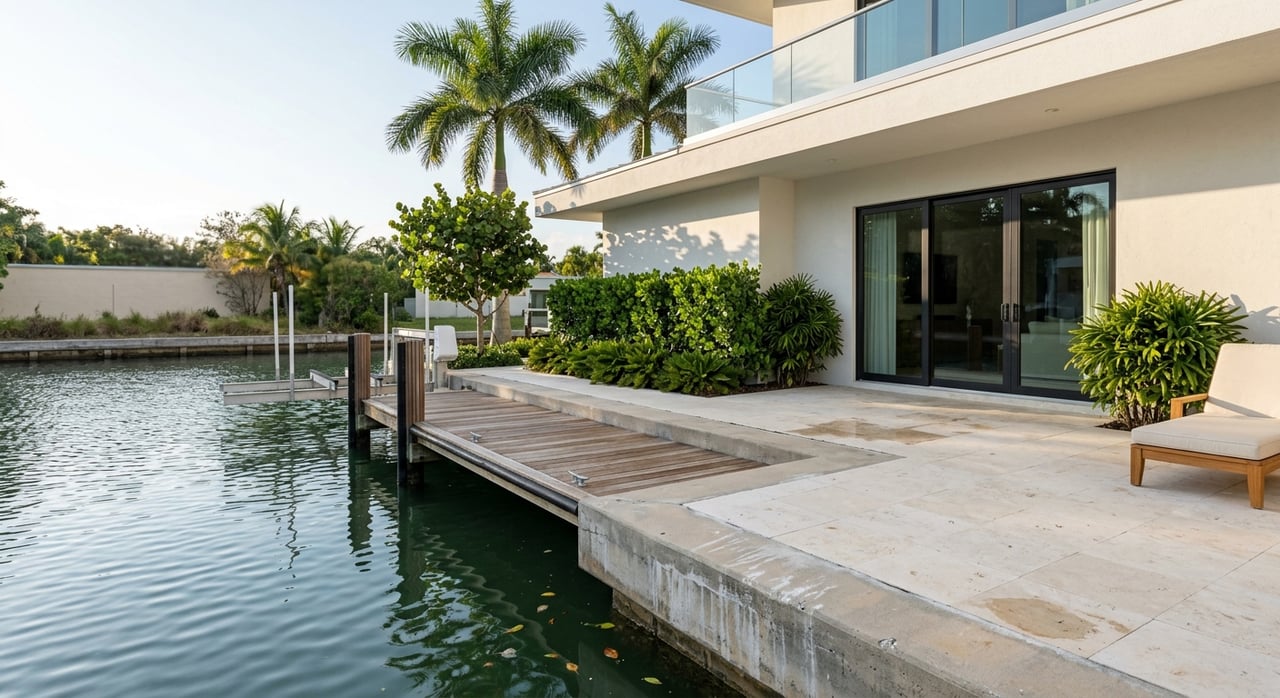
Selling a Key Biscayne waterfront home is rarely as simple as cleaning up, taking photos, and picking a price. On an island where flood readiness, permit history, dock utility, and water frontage can all shape buyer confidence, the details matter early. If you want to protect value and avoid preventable delays, a smart pre-listing plan can make a real difference. Let’s dive in.
Start With the Right Pricing Mindset
One of the biggest mistakes you can make is treating all Key Biscayne homes the same. In 2025, zip code 33149 recorded 38 closed single-family sales, with a median sale price of $3,975,000, an average sale price of $6,150,059, 92.0% of original list price received, a median 100 days to contract, and 13.9 months of supply. Those numbers give you a useful baseline, but they do not define the value of a waterfront property on their own.
Waterfront pricing in Key Biscayne is more layered. Recent public sales show a wide range tied to frontage, dock condition, lot utility, and location within the island. For example, 200 Harbor Dr sold for $19.5 million in August 2024, 660 S Mashta Dr sold for $13.8 million in March 2025, and 5 Harbor Pt sold for $23.5 million in October 2025.
The takeaway is clear: Key Biscayne waterfront is not one market. A home with direct waterfront, usable dockage, and a strong view corridor should not be priced the same way as a home that is simply near the water. Broad zip-code averages are a starting point, but the real pricing work comes from comparing homes with a similar waterfront profile.
Focus on Waterfront Features Buyers Notice
When buyers evaluate a waterfront home, they are usually looking beyond square footage. They want to understand how the water-facing features function, how well they have been maintained, and whether the property supports the lifestyle it appears to offer. That means your dock, seawall, lift, drainage, and outdoor spaces can carry real weight during showings and negotiations.
If your home includes features like a dock or boat lift, buyers will likely pay attention to condition and usability right away. The recent Key Biscayne waterfront sales highlighted details such as 100 to 120 feet of water frontage, new docks, lifts, and even a secluded beach. In this segment of the market, those features are not side notes. They are part of the value story.
Gather Flood Documents Early
In Key Biscayne, flood preparation is not optional background work. The Village of Key Biscayne states that the entire village is in a Special Flood Hazard Area and Evacuation Zone A. The village also notes that standard homeowners, business-owner, and renter policies typically do not cover flood damage, and flood insurance usually has a 30-day waiting period before it takes effect.
That makes flood documentation an important part of your pre-listing package. If a buyer or lender starts asking questions late in the process, delays can follow. A better approach is to organize these records before the home goes live.
You can request key flood-related information through the village, including:
- FIRM flood zone determination
- Base flood elevation or depth
- Confirmation of whether an Elevation Certificate is on file
Miami-Dade County also notes that an elevation certificate remains valid in perpetuity unless the structure changes or flood maps change. If your property has an existing certificate, that can be useful information to confirm and organize in advance.
Check Insurance and Wind-Mitigation Records
For many waterfront buyers, insurance readiness is part of the decision process. Florida’s current OIR-B1-1802 Uniform Mitigation Verification Inspection Form is valid for up to five years if there have been no material changes or inaccuracies. The form also requires supporting documentation and, for many items, at least one photo or other proof.
Before listing, it is wise to review the status of your wind-mitigation report, roof records, window documentation, and any available permit paperwork. Even when a buyer loves the home, uncertainty around insurability or missing records can create stress during due diligence. Clean documentation supports smoother conversations and stronger confidence.
Be Careful With Dock and Shoreline Repairs
Not every repair should happen before listing, and not every repair is simple. Miami-Dade County says one-time environmental permits may be required before construction or modification of a property, including a dock or pier, and a Class I permit is required before work in, on, over, or upon tidal waters or coastal wetlands, as well as for most mangrove trimming.
This is why waterfront prep needs a different lens than a standard home sale. A fresh coat of paint is one thing. Work involving a seawall, dock, shoreline, or mangroves is another.
Before starting exterior waterfront work, confirm whether permits are required and whether prior work on the property has a clear paper trail. The goal is not to over-improve. It is to avoid launching the listing with unresolved questions about waterfront compliance or incomplete repairs.
Fix What Affects Confidence First
If you are deciding where to spend time and money, start with the items that could affect pricing, insurance, or buyer trust. In Key Biscayne, that often means focusing on:
- Roof condition
- Impact windows or openings documentation
- Dock and lift condition
- Seawall status
- Drainage issues
- Pool equipment if applicable
- Flood and insurance paperwork
Because the village flood guide points to flooding, drainage, and stormwater management as recurring local issues, buyers may notice standing water, weathering, or deferred exterior maintenance quickly. A well-kept exterior does more than look good. It signals that the property has been cared for.
Stage the Outdoor Lifestyle
Staging still matters, even in a high-value market. The 2025 Profile of Home Staging found that 49% of sellers’ agents said staging reduced time on market, while 29% said it increased dollar value offered by 1% to 10%. The same research also reinforces the importance of curb appeal in attracting a buyer.
For a Key Biscayne waterfront home, outdoor presentation deserves just as much attention as the interior. Buyers are not only buying rooms. They are buying how the home lives from the entry to the water.
Focus your prep on these areas:
- Entry approach
- Terrace or patio
- Pool area
- Dock or boat lift
- Water-facing sightlines from main living spaces
Your goal is to make these spaces feel usable, clean, and intentional. Outdoor furniture should support the setting without cluttering it. If you have a summer kitchen, outdoor shower, or dock area, each feature should look functional and maintained.
Keep the Interior Simple and Bright
Inside the home, presentation should support the waterfront setting rather than compete with it. Light, uncluttered rooms and neutral styling often help buyers focus on layout, natural light, and the connection to exterior spaces. Clear visual access to terraces, patios, or the water can strengthen the impression of the home during both photos and in-person showings.
This does not mean stripping the home of personality. It means editing carefully so the eye moves naturally toward the property’s strongest features. On a waterfront listing, that usually includes the view, the outdoor living areas, and the overall sense of ease.
Plan a Practical Selling Timeline
A strong launch usually starts weeks before the listing goes live. For Key Biscayne waterfront homes, the process works best when documents, repairs, and staging happen in a logical order.
8 to 12 Weeks Before Listing
Start by gathering records and checking anything that is uncertain. This often includes flood-zone information, elevation certificate records, wind-mitigation paperwork, insurance declarations, service invoices, and permit history.
If needed, order inspections or evaluations for:
- Roof
- Windows or openings
- Dock
- Seawall
- Pool equipment
- Drainage
4 to 6 Weeks Before Listing
At this stage, complete the repairs that matter most to safety, insurance, and buyer confidence. If any waterfront work may require county permitting, address that before photography and marketing begin.
This is also the right time to avoid cosmetic projects that will not meaningfully improve value. In many cases, clarity and maintenance matter more than chasing every upgrade.
1 to 2 Weeks Before Listing
Finish staging, tidy exterior spaces, and prepare the home for photography and showings. Make sure your flood and wind documents are easy to share, and confirm the final showing plan if the property is occupied.
The Village of Key Biscayne notes that hurricane season runs from June 1 to November 30, with peak activity in mid-August through mid-October. If possible, exterior prep is best completed before late-summer weather adds pressure to the schedule.
Handle Occupied Showings With a Clear Plan
If your waterfront home is tenant-occupied, showing logistics should be addressed early. Florida Statute 83.53 says a tenant shall not unreasonably withhold consent for a landlord to enter the dwelling unit to show it to prospective or actual buyers, mortgagees, tenants, workers, or contractors. The statute also states that reasonable notice for repairs is at least 24 hours, with reasonable repair hours between 7:30 a.m. and 8:00 p.m.
In practice, a written showing plan usually makes the process easier for everyone. Set predictable showing windows, review lease terms early, and coordinate access in advance. A smoother showing process helps the property stay market-ready and reduces friction during the listing period.
Why Preparation Matters in Key Biscayne
In a market with long selling timelines, meaningful cash activity, and highly specific waterfront value drivers, preparation is part of pricing strategy. The 2025 market data for 33149 showed 27 of 38 single-family closings were cash, which suggests many buyers are well-capitalized and likely paying close attention to property condition, utility, and documentation.
That is why the best pre-listing plan is not about doing everything. It is about doing the right things in the right order. When your pricing is disciplined, your records are organized, and your waterfront features present well, you put yourself in a stronger position from the first showing through negotiation.
If you are thinking about selling a Key Biscayne waterfront home, working with a broker who values clear communication, local context, and careful preparation can help you avoid guesswork. To plan your next steps with confidence, connect with Delainy Quintero.
FAQs
What matters most when pricing a Key Biscayne waterfront home?
- The most relevant factors are your waterfront profile, including frontage, dock utility, view, location within the island, and renovation level, rather than broad zip-code averages alone.
What flood documents should a Key Biscayne seller gather before listing?
- You should gather flood-zone information, base flood elevation or depth details, and confirmation of whether an Elevation Certificate is on file, along with related insurance records if available.
What should a seller fix before listing a Key Biscayne waterfront property?
- Prioritize items that affect buyer confidence, insurance, or waterfront usability, such as roof issues, openings documentation, dock or lift condition, seawall concerns, drainage problems, and incomplete paperwork.
Do dock or seawall repairs in Key Biscayne require permits?
- They may, because Miami-Dade County says certain waterfront work, including docks, piers, tidal-water work, and most mangrove trimming, can require environmental permitting.
How should a tenant-occupied Key Biscayne home handle showings?
- A tenant-occupied home should use clear showing windows, advance coordination, and written expectations so access is predictable and marketing can move forward with less disruption.