If you are deciding between a condo and a house in Key Biscayne, the real question is not which one is better. It is which one fits your budget, your schedule, and your comfort level with maintenance and oversight. In a market where pricing, insurance, and storm readiness can look very different by property type, a clear comparison can save you time and costly surprises. Let’s break it down.
Why the Key Biscayne Choice Is Different
Key Biscayne is not a one-size-fits-all market. The Village places it in Evacuation Zone A and within a Special Flood Hazard Area, with a history of substantial flooding. That means your decision is not only about layout and lifestyle. It is also about how you want to manage storm exposure, insurance responsibilities, and long-term upkeep.
The local numbers also show a meaningful gap between condos and houses. In Q1 2026 for ZIP code 33149, the median sale price was $1.197 million for condos and townhomes, compared with $4.16 million for single-family homes. Condo supply measured 7.4 months, while house supply reached 13.8 months.
The pace of each segment was also different. Median time to contract was 92 days for condos and 210 days for houses. The single-family sample was small at 10 closed sales, so those figures are best used as directional context, but the contrast is still important when you are setting expectations.
How Budget Shapes the Decision
For many buyers, the first filter is price. In Key Biscayne, condos often open the door to the island lifestyle at a much lower entry point than a detached home. That does not automatically make a condo the better value, but it can make it the more realistic option if you want to keep more flexibility in your overall financial plan.
A house usually requires a much larger upfront commitment. That may work well if you want more privacy, more outdoor space, and more control over the property. It may feel less appealing if you are trying to limit carrying costs or keep cash available for renovations, reserves, or other investments.
Cash has also been common in both segments. In the same Q1 2026 sample, 30 of 48 condo and townhome closings were all cash, and 6 of 10 single-family closings were all cash. If you are using financing, it is smart to pay close attention early to lender requirements and, for condos, building eligibility.
What Condo Ownership Usually Means
A condo can be a strong fit if you want a more managed ownership experience. Under Florida law, the association is responsible for maintaining common elements, and the declaration may assign some limited common elements differently. The association must also provide for maintenance, repair, and replacement of condominium property it is responsible for under the declaration.
In practical terms, that often means less direct responsibility for certain exterior and shared areas. It can make a condo attractive if you want a lock-and-leave setup or if this will be a second home. It can also reduce the amount of day-to-day vendor coordination you handle yourself.
That convenience comes with structure. Associations control common elements, and many changes to those areas require board approval or broader association approval. So while a condo may simplify upkeep, it also usually means more rules and less unilateral control than a detached home.
Condo Costs to Watch Closely
The monthly condo number is never just your mortgage payment. It can also include association dues, reserves, and insurance costs built into the budget. In some cases, you may also face special assessments if the building needs major capital work.
That is why looking only at the list price can be misleading. A lower purchase price does not always mean a lower total cost of ownership. You need to understand what is included in the monthly carrying cost and what is not.
Condo Inspections and Reserve Rules
In Florida, milestone inspection rules apply to condominium or cooperative buildings that are three stories or more. The first inspection is required by the end of the year the building turns 30 years old, and then every 10 years after that. Local enforcement can require the first inspection at 25 years in salt-water-proximity conditions, which matters in a coastal area like Key Biscayne.
Florida also requires structural integrity reserve studies for applicable condos. For budgets adopted on or after December 31, 2024, required reserve items generally cannot be underfunded unless an alternative funding method is approved. Reserve needs may be funded through regular assessments, special assessments, lines of credit, or loans.
For buyers, this means building documents are not background paperwork. They are a core part of the purchase decision. If a required milestone inspection, turnover inspection report, or structural integrity reserve study has not been completed, Florida law requires a conspicuous disclosure in contracts entered after December 31, 2024.
Condo Insurance Basics
Florida law requires the association to maintain property insurance based on replacement cost. The association may also obtain flood insurance for common elements, association property, and units. But the statutory association policy does not cover everything inside your unit.
Several interior items and personal property are the unit owner’s responsibility. So if you are comparing condos, you should ask exactly what the association policy covers and what you would need to insure separately. In Key Biscayne, that question matters more because flood and storm exposure are part of everyday ownership planning.
What House Ownership Usually Means
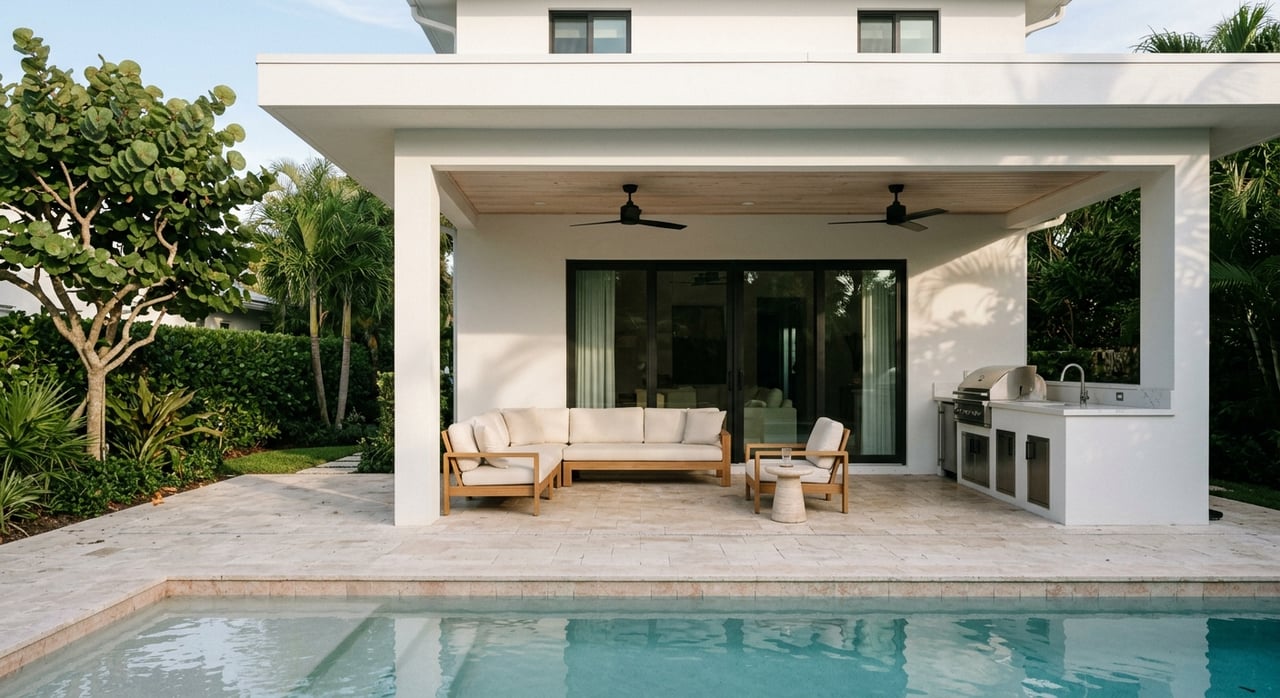
A house often fits buyers who want more privacy, more direct control, and more room for outdoor living. You typically have more say over how the property is used and improved. That can be a major advantage if space and autonomy are high on your priority list.
The tradeoff is responsibility. As a homeowner, you are generally the one paying for repairs, insurance, property taxes, and maintenance. In practical terms, that means the roof, exterior, landscaping, and much of the storm-hardening burden sit more directly with you.
That does not make house ownership a downside. For many buyers, it is exactly the point. But it does mean your budget should include room for maintenance variability, not just the mortgage payment.
Houses and Inspection Frameworks
Florida’s milestone inspection statute does not apply to single-family homes and similarly small residential dwellings with three or fewer habitable stories. So when you buy a detached house, you are not stepping into the same condo-style structural inspection and reserve framework. That can feel simpler, but it also means you need to evaluate the property’s condition more directly.
In Key Biscayne, that should include practical questions about roof age, insurance history, flood exposure, and likely annual maintenance costs. A house may offer more freedom, but it usually asks for more active management from the owner.
Lifestyle Fit: Convenience or Control?
For many buyers, the right answer comes down to how you want to live in the property. A condo generally fits buyers who want convenience, shared amenities, and less direct exterior maintenance. A house generally fits buyers who want privacy, outdoor space, and greater autonomy.
If you are buying a second home or you live part of the year elsewhere, time management can become the deciding factor. A condo can reduce the number of vendors and maintenance tasks you coordinate. A house usually requires a more hands-on upkeep calendar.
Outdoor space deserves a closer look in condos. If a balcony, terrace, or patio is important to you, confirm whether that area is a limited common element, a common element, or part of the unit’s appurtenances. Maintenance responsibility and use rights can differ, and those details affect the real day-to-day experience.
Key Questions Before You Decide
Here are some of the most useful questions to ask as you compare a Key Biscayne condo with a house:
- What does the current monthly carrying cost include, and what is excluded?
- For a condo, has the building completed any required milestone inspection and structural integrity reserve study?
- Are any repairs, funding gaps, or special assessments outstanding?
- What is the association’s reserve posture and insurance deductible?
- Who is responsible for shutters, impact glass, windows, balconies, and other exterior protection?
- Are there rental, pet, parking, storage, or renovation rules that affect how you plan to use the property?
- For a house, what is the roof age, insurance history, flood exposure, and realistic annual maintenance budget?
A Simple Way to Choose
If you value convenience, shared amenities, and a more managed ownership model, a condo may be the better fit. If you value privacy, outdoor living, and control over the property, a house may be the stronger match.
In Key Biscayne, the final decision should go one step further. Because the island is in Evacuation Zone A and a Special Flood Hazard Area, governing documents, insurance structure, reserve funding, and storm readiness deserve as much attention as the floor plan and finishes. The best purchase is the one that fits how you want to live and what you want to manage.
If you want help comparing Key Biscayne condos and houses with clear numbers and practical next steps, connect with Delainy Quintero for a consultation.
FAQs
What is the price difference between condos and houses in Key Biscayne?
- In Q1 2026 for ZIP code 33149, the median sale price was $1.197 million for condos and townhomes and $4.16 million for single-family homes.
What makes condo ownership different in Key Biscayne?
- Condo ownership usually means the association handles many common-area maintenance responsibilities, but you also have more rules, shared governance, and the need to review reserves, inspections, and insurance closely.
What makes house ownership different in Key Biscayne?
- House ownership usually gives you more privacy and control, but you take on more direct responsibility for repairs, exterior upkeep, insurance, and storm preparation.
Why do flood and storm issues matter when buying in Key Biscayne?
- The Village describes Key Biscayne as being in Evacuation Zone A and a Special Flood Hazard Area, so storm readiness, insurance structure, and property maintenance are central to the buying decision.
What condo documents should buyers review in Key Biscayne?
- Buyers should review the association budget, reserve information, insurance details, milestone inspection status, structural integrity reserve study status, and any disclosure of outstanding repairs or funding gaps.
Is a condo or house better for a second home in Key Biscayne?
- A condo may suit a second-home buyer who wants less day-to-day maintenance coordination, while a house may suit a buyer who wants more space and control and is comfortable managing more upkeep.