Shopping for a home in Coral Gables is not just about square footage or lot size. It is also about choosing a design language, a floor plan style, and a level of flexibility for future updates. If you are drawn to the character that makes Coral Gables stand out, understanding the city’s architecture can help you buy with more confidence. Let’s dive in.
Why architecture matters in Coral Gables
Coral Gables has a strong architectural identity rooted in its 1920s planning history. The city was conceived as a City Beautiful community, and the Coral Gables Museum highlights that long-standing connection to architecture, urban design, and civic planning.
That history still shapes what you see today. In practical terms, many buyers will come across an early Mediterranean Revival core, later postwar modern and ranch-era homes, and newer contemporary properties that are still influenced by city review standards. This pattern reflects the local historical and regulatory record.
Mediterranean Revival homes
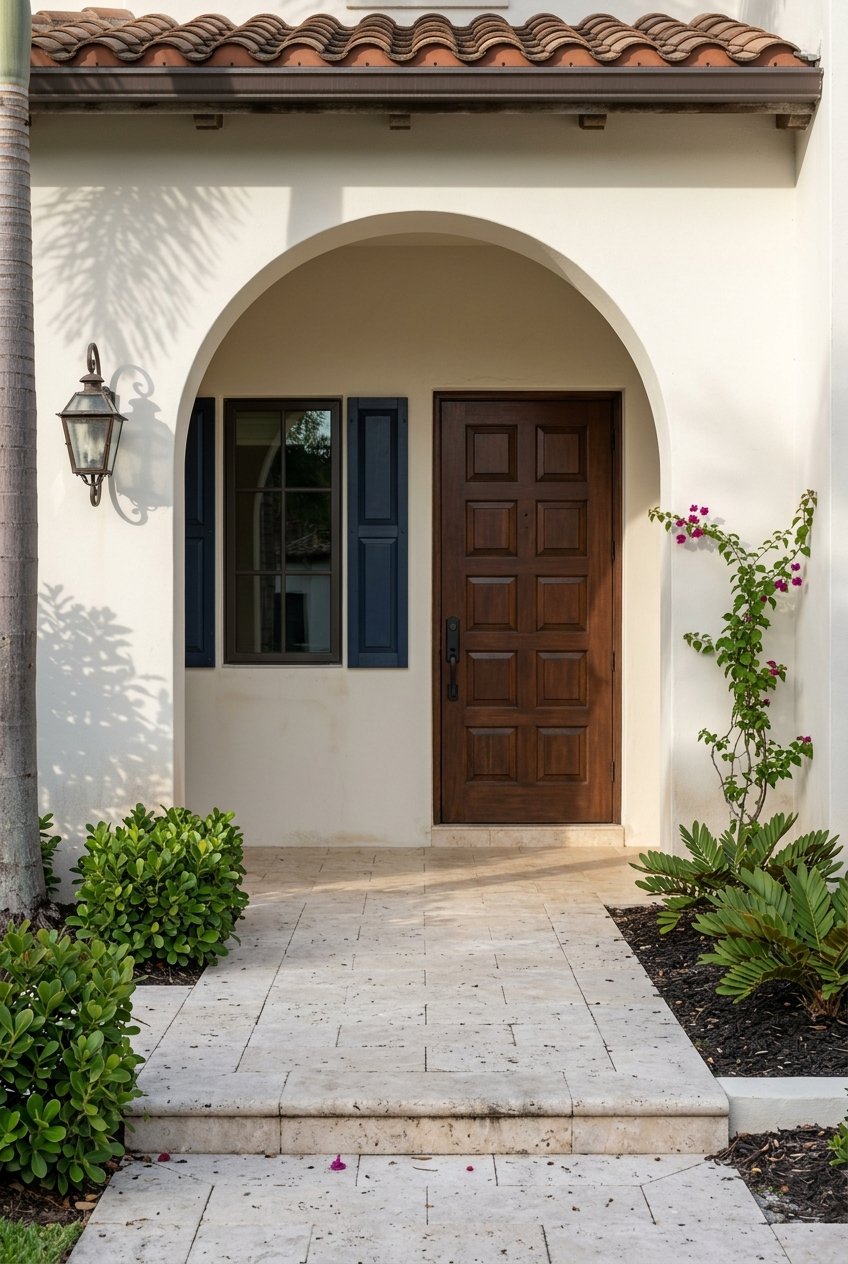
Mediterranean Revival is the signature Coral Gables look. Many of the city’s best-known landmarks, including City Hall, the Biltmore Hotel, Douglas Entrance, and the Cocoplum Woman’s Club, are identified by the city as Mediterranean Revival landmarks.
If you are touring homes in this style, you may notice features such as stucco walls, arches, barrel tile roofs, towers, coral rock or oolitic limestone, decorative trim, and courtyard-focused layouts. Miami-Dade preservation guidance also connects the style to complex massing, low-pitched terra-cotta roofs, varied openings, and paneled doors.
For many buyers, this is the style that delivers the strongest sense of place. It often feels formal, detailed, and connected to outdoor living through courtyards, loggias, and shaded transitions.
What buyers should expect
Mediterranean homes often offer charm that is hard to replicate. You may find rich architectural details, distinctive facades, and layouts that feel intentional rather than generic.
At the same time, the floor plans can differ from what some buyers expect in a newer home. Rooms may feel more defined, openings may be framed by arches, and the flow from one space to another can be less open than in a contemporary layout.
Historic villages and varied early styles
Coral Gables is not entirely one-note. The city created historic villages with themes such as Dutch South African, Chinese, French Normandy, Colonial, French Country, French City, and Italian-inspired design.
That matters when you are house hunting because it broadens the range of what “classic Coral Gables” can mean. You may see homes that still fit the city’s early vision but express it through a different visual language than the better-known Mediterranean Revival homes.
Why this matters for your search
If you love historic character but want something less common, these areas can be especially appealing. They remind buyers that the city’s architectural identity includes variety, not just one style repeated over and over.
This can also affect resale appeal. Some buyers specifically want iconic Mediterranean details, while others are drawn to a more distinctive historic look within the same broader setting.
Early vernacular homes
Some of Coral Gables’ oldest homes are simpler and less ornamental than the city’s landmark Mediterranean residences. The city describes the Merrick House as early vernacular architecture using native coral rock, and it notes that the home helped establish material and form precedents repeated throughout Coral Gables.
In neighborhoods south of U.S. 1, the city also notes Bahamian-influenced shotgun and bungalow forms in MacFarlane Homestead and Golden Gate. For buyers, this helps explain why certain older residential pockets may look and feel different from the image many people first associate with Coral Gables.
What these homes can offer
These properties may appeal to buyers who value history and local building traditions over ornament. They can present a more modest architectural profile while still carrying strong historical significance.
If you are considering one, it is worth looking closely at condition, prior renovations, and how much original character remains. Simpler architecture does not always mean a simpler renovation path.
Postwar modern and ranch-era homes
Not every Coral Gables home dates to the 1920s. According to Miami-Dade County’s architectural history guidance, many areas originally platted in the 1920s were built out after World War II with more restrained traditional, modern, or ranch-style housing.
These homes often responded to South Florida’s climate in practical ways. County guidance points to features such as jalousie windows and concrete block screen walls, which are tied to ventilation, shade, and regional building patterns.
For buyers, these homes can feel very different from early Mediterranean properties. They are often more horizontal, more restrained, and less formal in layout.
Why some buyers prefer them
If you want a home with a simpler footprint or a more casual interior flow, postwar homes may be worth a close look. They often feel less ornate and may offer a different balance between indoor and outdoor space.
Coral Gables’ virtual history archive also includes thousands of photos of homes from the 1940s and 1950s, and city review materials have identified categories such as high modern and post-war modern for existing residences. That gives useful context if you are trying to understand whether a home fits a true period style or a later renovation trend.
Contemporary and high-modern homes
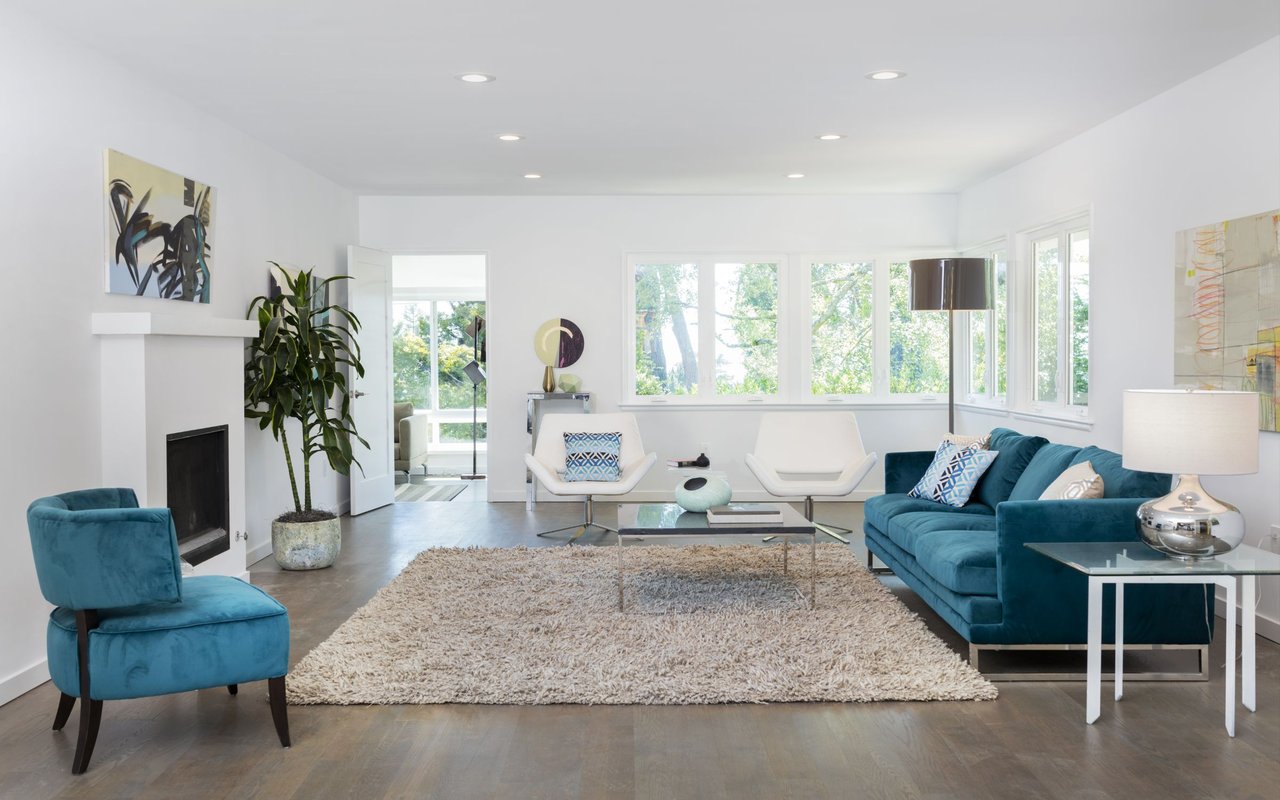
Newer homes in Coral Gables often look cleaner and more streamlined, but they are not designed in a vacuum. County guidance describes contemporary homes as generally one-story, low-pitched, and asymmetrical, with broad wall surfaces, recessed entries, screened outdoor areas, and large windows or window walls.
At the same time, Coral Gables reviews exterior design carefully. The city’s Board of Architects looks at materials, color, fenestration, proportion, and tree protection, which helps explain why newer homes in Coral Gables can feel more restrained than contemporary homes in other parts of Miami-Dade.
What this means for buyers
If you like modern design, Coral Gables can still offer it. The key difference is that the city places a strong emphasis on compatibility with surrounding homes and streetscapes.
That can be a benefit if you value visual continuity and a well-maintained neighborhood setting. It can also mean more review standards if you plan major exterior changes after you buy.
How style affects floor plans
Architecture is not just curb appeal. It shapes how a home lives day to day.
Mediterranean homes in Coral Gables often organize living around courtyards, arcades, loggias, arches, and shaded outdoor transitions. The city’s landmarks, including Coral Gables Elementary, reflect this courtyard-oriented approach, and county guidance points to complex massing and varied openings that blur indoor and outdoor space.
Postwar and contemporary homes usually read as simpler and more horizontal. Based on county style descriptions, they often produce less formal layouts and stronger visual connections to patios or courtyards through glass openings and recessed entries.
A simple way to compare styles
| Style | Common feel | Typical layout cues |
|---|---|---|
| Mediterranean Revival | Formal, detailed, character-rich | Courtyards, arches, loggias, defined rooms |
| Early vernacular | Modest, historic, local | Simpler forms, traditional materials |
| Postwar modern/ranch | Casual, practical, horizontal | Simpler footprints, climate-responsive details |
| Contemporary/high-modern | Streamlined, open, restrained | Broad wall planes, large windows, patio connection |
Outdoor space matters in every style
In Coral Gables, outdoor design is not an afterthought. The city’s single-family design best practices emphasize open-air porches, pedestrian-oriented design, compatible house form, and garage placement that does not dominate the street.
The same guidance also shows how trees, landscaping, and circulation are part of the review process. For buyers, that means a home’s lot, canopy, and relationship to the street can matter almost as much as the house itself.
Questions to ask when touring
- How does the home connect indoor and outdoor living?
- Does the front elevation feel porch-oriented or garage-dominant?
- Are mature trees or landscaping likely to affect future renovation plans?
- Does the existing layout support the way you want to use outdoor space?
Renovation rules to understand before you buy
If a property is locally designated or located in a historic district, most exterior work goes through the city’s Historic Preservation office and usually needs a Certificate of Appropriateness before a building permit is issued. According to the city’s historic preservation guide, repainting or in-kind repairs may be handled administratively, while major exterior remodeling, additions, and demolition typically go to the Historic Preservation Board.
Interior remodeling is usually not reviewed unless tax relief is involved or the interior space has special historic protection. That distinction is important if you want to update a kitchen or rework interior living space while preserving the exterior character.
Preservation can also offer benefits
Many buyers assume historic oversight only adds restrictions. In Coral Gables, the city states that historic designation does not itself raise property taxes, and approved improvements may qualify for a 10-year ad valorem freeze on the value of those improvements.
That makes preservation a more balanced conversation. You may have more process to follow, but you may also gain stability and potential incentives.
What bigger remodels usually require
For new homes and major remodels, Coral Gables expects a detailed review package. The city’s Board of Architects application materials call for items such as a current survey, neighborhood context study, photos, floor plans, roof plans, elevations, demolition drawings, and sometimes a historical significance letter or 3D model.
That is why your buying decision should include a renovation strategy, not just a wish list. A home that looks perfect on paper may still require time, design coordination, and approvals if you plan to expand or alter it.
How to choose the right style for you
The best Coral Gables home is not always the most iconic one. It is the one that matches how you want to live and how much change you expect to make after closing.
If you want the strongest Coral Gables character, early Mediterranean or village-era homes may be the right fit. If you want a simpler layout or potentially more flexibility, later postwar homes or non-designated properties may be worth exploring, while keeping in mind that the city still places real importance on exterior compatibility, trees, and streetscape.
As you narrow your options, focus on three questions:
- Do you want historic character or a more updated layout?
- How much renovation flexibility do you need?
- Are you comfortable with a more structured review process for exterior work?
Buying in Coral Gables is often about tradeoffs, but they can be good tradeoffs when you understand them upfront. If you want clear guidance on how architecture, renovation potential, and long-term value fit into your search, connect with Delainy Quintero for a thoughtful, education-first approach.
FAQs
What architectural style is most common in Coral Gables?
- Mediterranean Revival is the signature style most closely associated with Coral Gables, with features like stucco walls, arches, tile roofs, and courtyard-oriented design.
Are all Coral Gables homes Mediterranean-style homes?
- No. Buyers may also encounter historic village styles, early vernacular homes, postwar modern and ranch-era properties, and newer contemporary or high-modern homes.
Do historic Coral Gables homes have stricter renovation rules?
- Yes. If a home is locally designated or located in a historic district, most exterior work typically requires Historic Preservation review and often a Certificate of Appropriateness before permitting.
Can you renovate the interior of a historic home in Coral Gables?
- Usually yes. The city states that interior remodeling is generally not reviewed unless tax relief is involved or the interior has special historic protection.
Do newer contemporary homes in Coral Gables still face design review?
- Yes. The city’s Board of Architects reviews major exterior design elements such as materials, color, proportion, fenestration, and tree protection.
How does architecture affect daily living in Coral Gables homes?
- Style often influences layout, indoor-outdoor flow, shade, room openness, and how formal or casual the home feels from one space to the next.